
Shoulder Rehab for Rotator Cuff Injuries
Evidence-based rotator cuff rehabilitation exercises, phases of recovery, and tips for optimal shoulder healing.
Key Takeaways
- Post-surgical rotator cuff rehab takes 6-9 months with four distinct phases
- Passive motion only for the first 6 weeks after repair — do not actively lift the arm
- External rotation with resistance bands is the cornerstone of rotator cuff strengthening
- Scapular stabilization is just as important as rotator cuff strengthening
- Use the 24-hour rule to gauge whether exercise intensity is appropriate
- 60-80% of rotator cuff tears can be managed with physical therapy alone
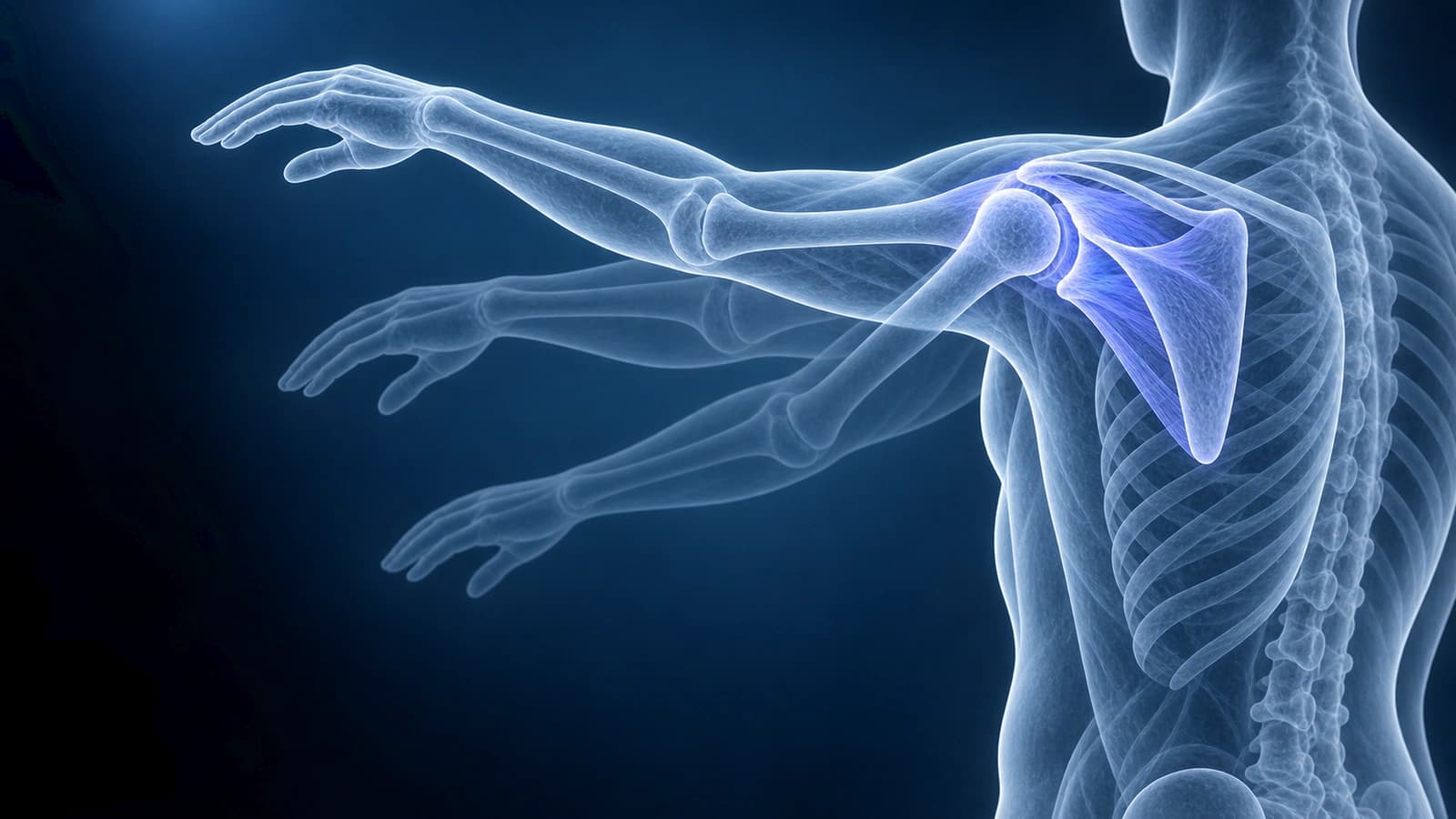
Rotator cuff rehabilitation is essential whether you are recovering from a tear managed conservatively, preparing for surgery, or rehabilitating after a surgical repair. The rotator cuff consists of four muscles and their tendons — supraspinatus, infraspinatus, teres minor, and subscapularis — that work together to stabilize the shoulder and enable overhead movement.
Effective rehabilitation restores the balance between mobility and stability, reduces pain, and returns you to functional activities. This guide covers the key principles, exercises, timeline, and common mistakes in rotator cuff rehab. For understanding tear severity, see our guide on rotator cuff tear classification.
Phase 1: Pain Management and Protected Motion (Weeks 0-6)
After rotator cuff repair, the tendon needs time to heal to bone. You will wear a sling for 4-6 weeks, and movement is limited to passive range of motion. Goals include managing pain and swelling, preventing frozen shoulder, and maintaining elbow, wrist, and hand mobility.
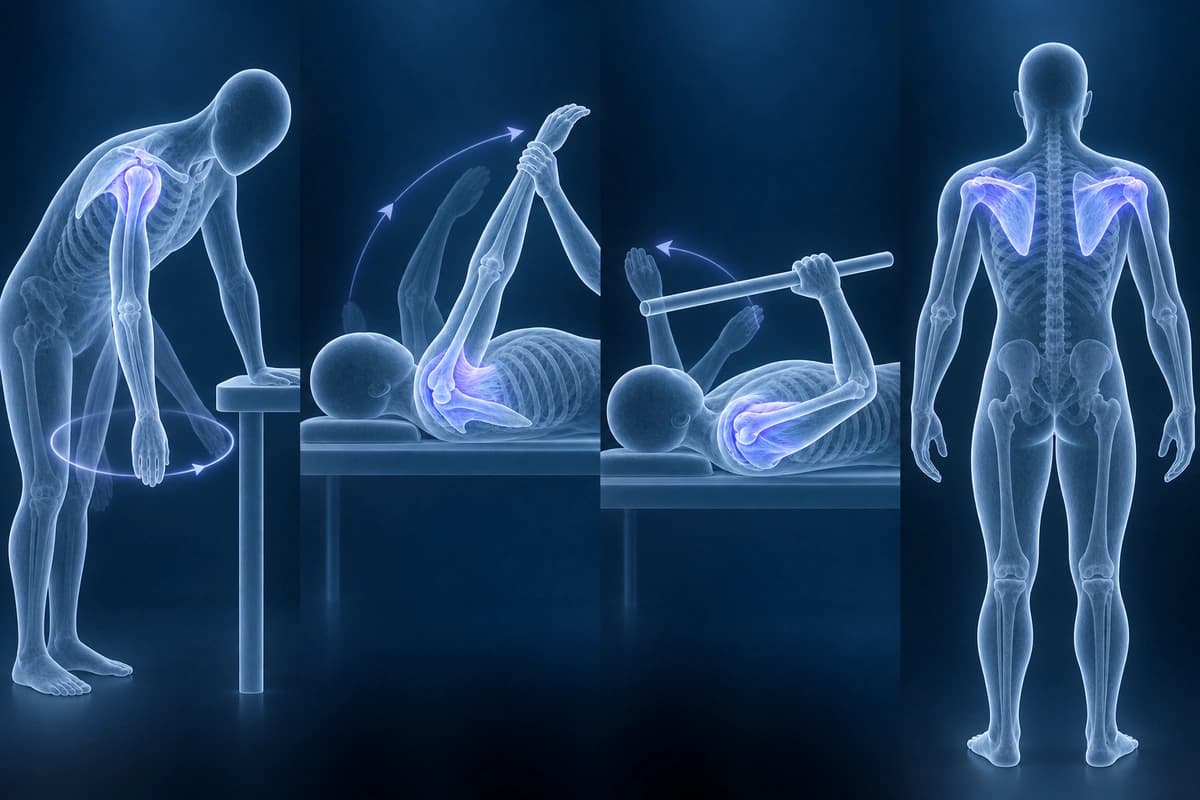
- Pendulum swings: leaning forward, letting the arm swing in gentle circles
- Passive forward flexion using a pulley or the other arm
- Passive external rotation with a stick
- Scapular squeezes and retraction exercises
Avoid lifting anything heavier than a coffee cup. For conservative (non-surgical) management, this phase is shorter and active motion can begin earlier.
Phase 2: Active Motion (Weeks 6-12)
Once the sling is removed, active range of motion begins. The rotator cuff muscles now start moving the arm under their own power, but without resistance. Goals include active forward flexion to at least 140 degrees and active external rotation to at least 40 degrees. Isometric rotator cuff exercises begin to gently activate the healing tendons. Scapular stabilization exercises including wall slides, serratus punches, and low rows ensure proper shoulder blade mechanics.
Phase 3: Strengthening (Weeks 12-20)
Strengthening begins with light resistance and progresses gradually. This is where the rotator cuff muscles rebuild strength for daily activities and sport demands.
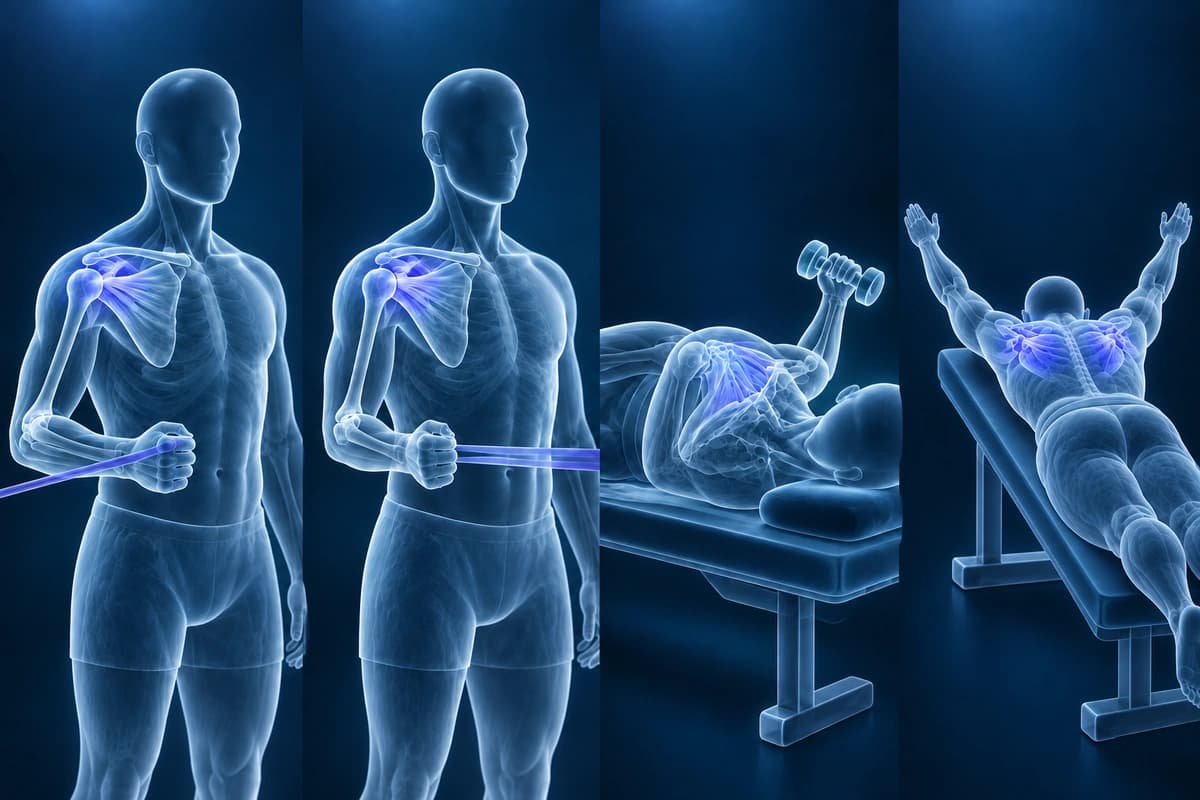
- External rotation with resistance band (cornerstone of rotator cuff strengthening)
- Internal rotation with resistance
- Side-lying external rotation with light dumbbell
- Prone horizontal abduction (I, Y, T exercises)
- Progressive shoulder flexion and abduction with increasing resistance
Increase resistance only when you can perform 3 sets of 15 repetitions with good form and no pain.
Phase 4: Advanced Strengthening and Return to Activity (Months 5-9)
The final phase targets return to full function including overhead activities and sport. Exercises progress to overhead pressing, plyometric ball tosses, sport-specific progressions, and full-body exercises like cable chops and push-up variations. Return to sport or heavy labor typically occurs between 6-9 months post-repair.
When to Push, When to Rest, and Non-Surgical Rehab
Use the 24-hour rule: if your shoulder is no worse 24 hours after exercise, the load was appropriate. Sharp pain at the surgical site or compensatory movement means you are doing too much. Many rotator cuff tears are managed without surgery — studies show 60-80% of patients achieve satisfactory outcomes with physical therapy alone. Conservative rehab moves faster since there is no repair to protect.
Frequently Asked Questions
How long until I can sleep comfortably after rotator cuff repair?
Most patients find a reclined position most comfortable for the first 4-6 weeks. Side sleeping on the operated side is typically not comfortable until 3-4 months. Full comfortable sleep usually returns by 4-6 months.
Can I do push-ups after rotator cuff repair?
Push-ups should not be attempted until at least 4-5 months post-repair. Begin with wall push-ups, progress to incline, then floor push-ups when the previous level is pain-free. Full push-ups may not be comfortable until 6-9 months post-surgery.
What is the re-tear rate after rotator cuff repair?
Re-tear rates vary by tear size: small tears approximately 10-15%, medium 20-30%, and large or massive 40-60%. Despite re-tears on MRI, many patients still report significant pain improvement. Adhering to rehabilitation protocols reduces re-tear risk.
How do I know if my rotator cuff has re-torn?
A sudden return of weakness after improvement, especially following a fall or heavy lift, may indicate re-tear. Gradual loss of strength is more often due to incomplete healing. Your surgeon can order MRI or ultrasound to assess integrity.
Should I use ice or heat during rotator cuff rehab?
Ice is preferred in early phases and after exercise to manage swelling. Heat can be used before exercise in later phases to improve flexibility. Avoid heat when swelling is present.
Sources
- Thigpen CA, Shaffer MA, Gaunt BW, et al. The American Society of Shoulder and Elbow Therapists' consensus statement on rehabilitation following arthroscopic rotator cuff repair. J Shoulder Elbow Surg. 2016;25(4):521-535.
- McElvany MD, McGoldrick E, Gee AO, et al. Rotator cuff repair: published evidence on factors associated with repair integrity and clinical outcome. Am J Sports Med. 2015;43(2):491-500.
- Kuhn JE, Dunn WR, Sanders R, et al. The predictors of surgery for symptomatic, atraumatic full-thickness rotator cuff tears change over time: ten-year outcomes of the MOON Shoulder Prospective Cohort. J Bone Joint Surg Am. 2024;106(17):1563-1572.
- American Academy of Orthopaedic Surgeons. Rotator Cuff and Shoulder Conditioning Program. OrthoInfo.
Related Articles
Explore whether rotator cuff tears can heal conservatively, factors affecting recovery, and when surgery becomes necessary.
Your MRI says partial- or full-thickness rotator cuff tear? Learn what these terms, tear size and retraction mean, and how they shape treatment choices.
Related Conditions
Understand your imaging before your next appointment
MRI, X-ray or CT from a CD, folder or ZIP. A PDF report or photos of the films work too.
Free to open and preview, no account needed. An optional AI report from $10 explains your images in plain language, with questions for your doctor.
Your raw files stay on this device. Only rendered images and minimal context are sent when you request an AI report.
Medical Disclaimer: This page is for informational and educational purposes only. It does not constitute medical advice, diagnosis, or treatment. AI-generated analysis may contain errors. Always consult a qualified healthcare professional for medical decisions. Full Disclaimer